
There is anecdotal evidence that suggests that as we age, our friendship circles narrow. I don’t know that we need peer-reviewed research to confirm what most of us feel in our bones: the older we get, the fewer people we call friend.
When you are in elementary school, everyone in your classroom is referred to as a “friend.” Proximity is enough. Shared crayons, shared secrets, shared snacks—friendship is assumed. We grow up with the idea that familiarity plus frequency equals connection. Anyone within reach of our daily routine can qualify.
But as we age, we come to understand that friendship is built on trust. And trust, unlike proximity, cannot be mass-produced. It is earned slowly, sometimes painfully. Having experienced betrayal in its various forms—disappointment, abandonment, gossip disguised as concern—we learn that trust is not to be handed out lightly. The circle narrows not only because life becomes busier, but because our standards become clearer.
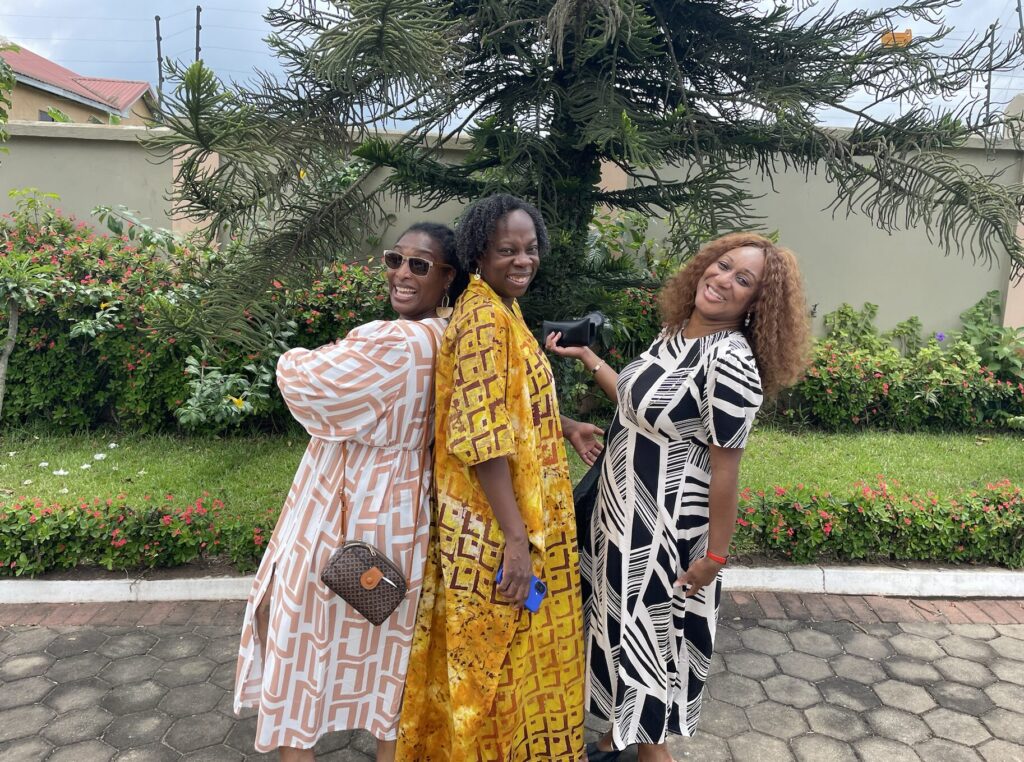
I have recently taken stock of my friendship circle and noticed that it is remarkably smaller than it was a short five years ago. Once upon a time this would have alarmed me. I might have interpreted it as a failure—proof that I was becoming closed off, antisocial, or bitter. But at present, I neither feel satisfied nor dissatisfied with this reality. I have accepted it for what it is.
What surprises me more is that I find myself less inclined to go out in search of new friendships. This I find curious and interesting, because I am someone who considers herself relatively outgoing. To the ordinary observer, I would most certainly seem so. I can hold a room. I can laugh loudly. I can ask questions and listen intently. But making a friend—capital F Friend—is something else entirely.
The process feels energy-consuming and tiring. And that is not to say that I do not enjoy or appreciate human connection. I do. I thrive on conversation. But the word friend means something much deeper to me now. A friend is someone I can call in my gravest hours of need. Someone I can confide in. Someone whom I can trust implicitly. At 48, that is a lot of emotional labor to invest.
I recently spoke to a new acquaintance who is 68, and she concurs. She is not interested in making new friends. Like me, she is content with more superficial engagements. We enjoy coffee together. We indulge in the occasional bit of gossip. We talk about our setbacks and shake our heads at the world. But neither one of us has invited the other to our home. Neither of us has expressed interest in introducing significant others or children. We are very happy with our acquaintanceship.
She has gently primed me to be ready for this to be the status quo moving forward. That perhaps at this stage in life, companionship does not have to deepen in order to be meaningful. That not every pleasant interaction needs to be cultivated into a lifelong bond.
And yet, I still wrestle with the concept of friendship as a woman approaching 50.
Earlier this year, I found myself reflecting on this after an email exchange with a producer at an international media house. She and I had enjoyed a handful of pleasant conversations while she prepped me for a show the year before. We were humorous and engaging with each other. I remembered her fondly and reached out at the beginning of the year to offer New Year’s compliments.
We both signed off our responses with the obligatory, “Please keep in touch!”
A few weeks later, I followed up with general updates on my professional life, and she did the same. Once we exhausted that topic—relatively quickly—I remarked that she might not hear from me as often as I’d hoped, because I don’t generally have big things going on in my life to report.
I wrote:
“I will certainly keep in touch. Sometimes I feel as though I don’t have enough to report to warrant a ‘hi,’ but I have to remember that the value in our human connections is not just to report the extraordinary moments, but to let each other know that our existence is the gift to be celebrated, not just events.”
It wasn’t self-deprecating. It was observational. My Instagram feed may suggest an exciting life, but in reality, the noteworthy events are quarterly at best. The rest is routine. Work. Laundry. School runs. Mild existential crises. Repeat.
How does one develop a friendship that began through a professional channel when the professional updates dry up? Would she be interested in the banal details of my life? In my children’s minor victories or my internal doubts? Probably not. Not in the way a true friend would be.
And that is when the thought crystallized for me: adult friendships are often based on perceived utility.
What can you offer?
Access?
Opportunity?
Information?
Status?
Energy?
If the answer is “not much,” the interaction often fades.
I experienced this more painfully in a recent conversation with an acquaintance I have known online for nearly eight years. We were discussing employment—specifically my employment. She asked where I saw myself going in the next five years. I responded honestly: I am still trying to figure it out.
Her response was incredulous. “Aren’t you almost 50??”
The remark stung. Not because it was inaccurate—I am almost 50—but because it carried judgment. An implication that by this stage, I should have arrived. I should have a clear niche, a defined money-maker, a professional purpose neatly packaged and monetized.
The truth is, I have worked in numerous industries—housekeeping, HR, recruiting, marketing. I have built things. I have dismantled things. I have pivoted more times than I can count. And yet, I still feel in motion.
Once it became clear that I had little professional capital to demonstrate—no grand five-year plan, no impressive upward trajectory—the conversation petered out. We agreed it was time to go home.
I couldn’t help but wonder: if I had answered differently, would the energy have shifted? If I had declared a bold new venture or a high-profile opportunity, would the curiosity have lingered? Would I have seemed more valuable as a connection?
This is the uncomfortable terrain of midlife friendship. When we were younger, friendships were built on shared experience and emotional intensity. Now, they are often filtered through the lens of capacity and capital. Time is scarce. Energy is rationed. And subconsciously, we invest where we perceive return.
That does not mean we are all calculating opportunists. But it does mean that adulthood forces us to evaluate where we pour ourselves. And increasingly, we pour into spaces that either sustain us emotionally or stimulate us practically.
So what does this mean for those of us who still long for connection, but are too tired to audition for it?
I think it means three things.
First, redefine friendship without shame.
Not every warm interaction needs to evolve into a soul tie. Acquaintanceships have value. Coffee companions have value. The woman you text memes to but never confide in has value. Releasing the pressure to deepen every connection allows us to enjoy people where they are.
Second, detach worth from utility.
If a relationship fades when you have nothing impressive to report, let it. Your value is not in your productivity or your proximity to power. The right people will be interested in your ordinary days, not just your extraordinary milestones.
Third, invest intentionally, not desperately.
At this stage in life, friendship requires discernment. Choose people whose presence feels reciprocal and restful. Depth is still possible after 40—but it will be slower, rarer, and more deliberate. And that is okay.
Perhaps the narrowing circle is not a loss, but a refinement. Perhaps adulthood is not about accumulating friends, but about clarifying which connections can hold the full weight of who we are becoming.
And perhaps the most radical act at nearly 50 is this: to show up as you are—still figuring it out—and trust that your existence, even in its ordinariness, is enough.