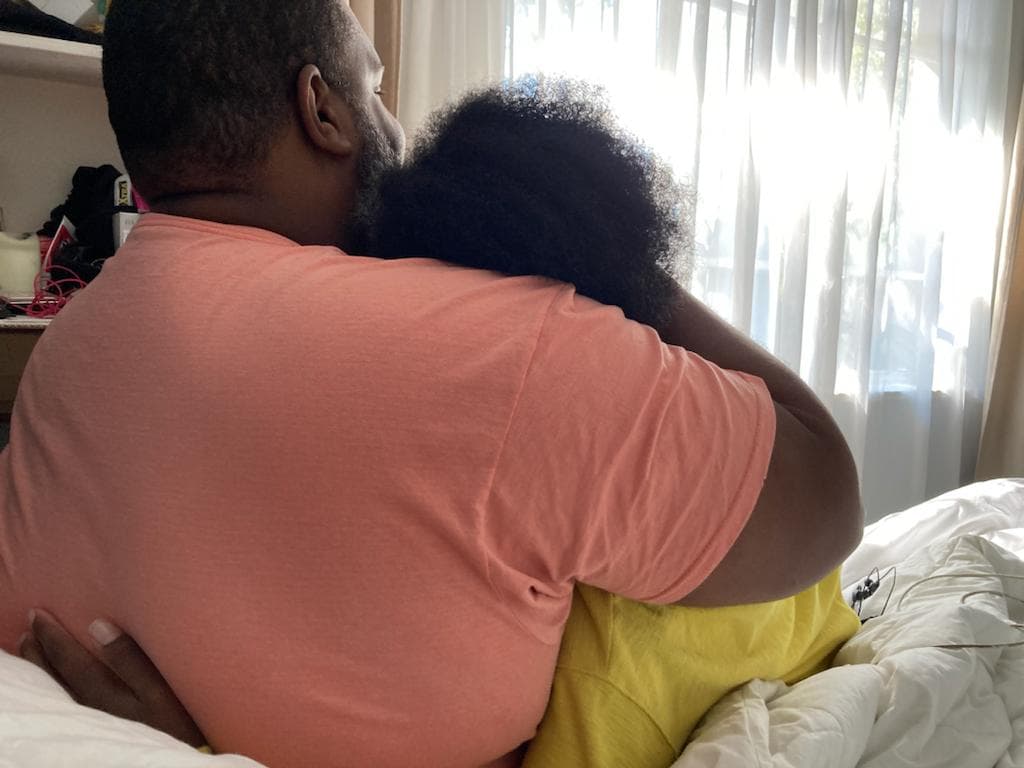
So many of us are dealing with the real effects of surviving a period of parenting that has done harm—sometimes irreparable—to our bodies, souls, and psyches. This is not hyperbole. The USA’s Department of Veteran Affairs reports that “about 15% to 43% of girls and 14% to 43% of boys go through at least one trauma. Of those children and teens who have had a trauma, 3% to 15% of girls and 1% to 6% of boys develop PTSD. Rates of PTSD are higher for certain types of trauma survivors.”
The types of abuses that occur include neglect, physical abuse, sexual abuse, and psychological (mental) abuse.
While the numbers will vary from country to country, this is a global phenomenon. And while some countries may not have the funds to sponsor similar studies, there is plenty of anecdotal evidence to indicate that parental abuse and childhood trauma do not discriminate by race, nationality, or gender.
What many parents fail to realize is that children do not only need to know that they are loved—they need to know that they are liked.
Even at 48, I still carry scars from an imperfect childhood experience. It affects my shopping and eating habits, my self-worth—even how I approach my love life. I still battle shame in certain areas, despite the “benefit” of nearly 21 years of marriage. My parents did quite the number on me and my siblings, but we are not unique in that regard.
The mantra of many latter Gen-Xers (such as myself) and millennials is that we do not want to raise children who will eventually have to heal from their childhoods.
This topic has become of particular interest to me for several reasons. With three of my four children now having moved out of the house and living abroad, they have ostensibly been “raised.” The outcome—the success or failure of their upbringing—is now evident for all to see.
My sister, on the other hand, has much younger children. She is still in the rearing phase of motherhood, with such unpleasantries as scheduling tutor time, hawking over them until homework is done, and badgering them about the pursuit of their best—lest they fall victim to capitalism and end up aspiring to nothing greater than—I don’t know—an 18th-century chimney sweep because that’s all their third-grade attention span could afford them.
She and I have spent many a phone call consoling and encouraging each other. We are still haunted by certain aspects of our upbringing and each is as desperate as the other not to repeat them.
“All this nagging and badgering…I don’t know if I’m doing the right thing,” she lamented.
“I know,” I replied. “And the sad thing is that you won’t really know if you’ve raised your children well until they have been raised. You will only see the results of your efforts once they are adults.”
“I don’t want them to grow up and become ineffective failures…” she continued.
I assured her that they wouldn’t. Not to brag, but my nephew and niece are talented and strong in their own right. My concern is never that either of them will never “amount to anything,” but rather whether they know that their parents love them.
And beyond that—are they confident that their parents like them?
I think this is an important aspect of parenting that is often underestimated.
In August Wilson’s play Fences, there is a pivotal scene where Cory (son) asks Troy (father) why he never liked him. What ensues is a blistering monologue about duty and responsibility, but never an indication of tenderness or affection for his son—a boy who is obviously starved of both.
Ultimately, Cory leaves home to join the military, having never reconciled with a father who never knew him outside the prism of obligation or communal expectations of fatherhood. The next time we see Cory is when it is time to bury Troy.
This scenario is becoming much more normalized, with people of my generation and younger choosing inner peace over filial obligation. You see more and more folks acknowledging—sometimes even celebrating—their estrangement from their parents.
The language of “going no-contact” or “low-contact” has become commonplace online and in therapy rooms. Adult children are increasingly willing to distance themselves from parents who fulfilled the technical obligations of parenthood—providing food, shelter, and schooling—but failed to nurture a relationship built on respect, curiosity, and affection. Love that is expressed only as duty can feel cold. And duty without warmth rarely inspires loyalty.
In much of this, parents are caught blindsided.
For most of human history, there has been an unquestioned expectation that one’s children would avail themselves to you in your advanced years, whether you were a brute or a saint. However, what many professionals in the home health and elder care industries are reporting is that the loneliness many of their clients experience is often the result of their inability to recognize the importance of likeability to their children during the early years of their relationship.
At best, they may be checked on for cursory reasons. But no one wants to be bothered with someone they don’t actually like.
People often marvel at how my husband and I have been able to develop such an amicable relationship with our children now that they are young adults.
I attribute it to the fact that I have always made them feel that anything they had to say—whether it was about Legos, My Little Pony, or a crush—was important. Marshall believes it is because we have been consistent in keeping our promises, whether it was a spanking they had earned or a gift we had promised. (This is how my daughter got her fourth ear piercing!)
Essentially, dialogue between parents and children is important. All relationships thrive on effective communication.
This is why I was so happy to see a show called If Fathers and Sons Were 100% Honest. In each segment, a set of fathers and sons are given free rein to ask questions, justify actions, come to a place of healing—and sometimes continue in anger and disappointment.
This is powerful because the position of the African father is one that is often considered infallible, never to be questioned and certainly not to have its shortcomings aired for the masses to witness.
However, if these men want to spare themselves the heartache of loneliness in their later years, it behooves them—and others who see themselves reflected in their actions—to pivot and attempt to rescue their relationships with their children before it is too late.
That is the point of being older and wiser.
This is leadership.
I have been writing on this site for 17 years about motherhood and parenting in general. I have not always gotten it right in my capacity as a parent. But I can say with almost complete certainty that my children not only know that I love them fiercely—they also know that I like them tremendously.
My children are both the best and most questionable parts of me amplified. I see myself in them.
And thankfully, they know that I like what I see.