It feels as though it’s easier than ever to identify evil — whether in people, systems, or events. Some things are objectively evil. Israel’s genocide of the Palestinian people is an objectively evil act. Jeffrey Epstein was an unquestionably evil man. Adolf Hitler and his Nazi Party were undoubtedly evil. Evil is part of the human experience, stretching back to the first murder in the Garden of Eden, where Cain killed Abel in a fit of envious rage.
It is easy for us, the righteous observer, to cast judgment on these people and their actions after the fact. The more difficult question is this: why was that judgment absent while these atrocities were unfolding in real time? Why was there no righteous conviction to step in during the suffering itself? What motivated our collective silence? And furthermore, at the end of all things, why does the condemnation of evil so rarely include us, the observer?
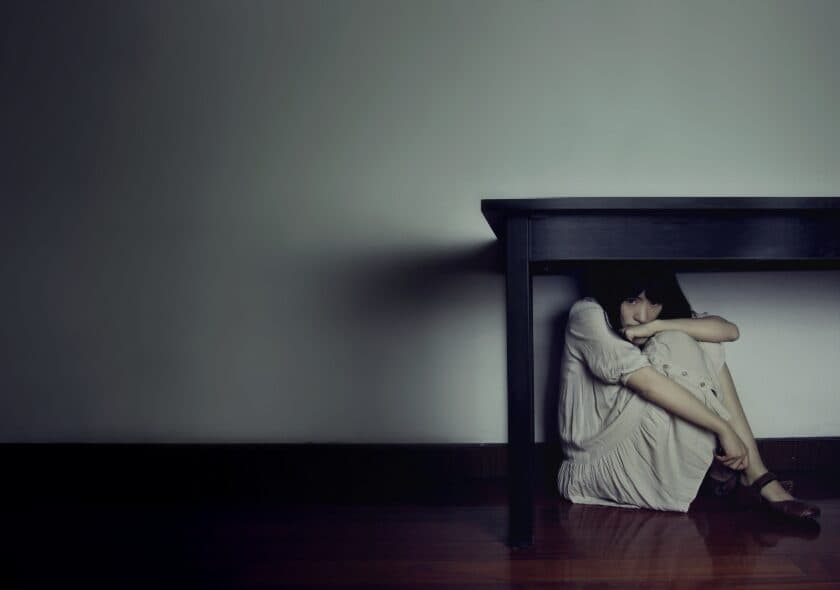
There are many possible answers, but to my mind, it all boils down to one thing: cowardice. The same cowardice that keeps us silent in the face of rape, war, and destruction is the same cowardice that prevents us from judging ourselves. And that — to me — is the greatest evil of all.
It is impossible to escape evil in the modern age. Every day, our devices confront us with videos of police brutality, violence against children, and horrors committed in places meant to provide safety — churches, hospitals, schools — often with little or no consequence. We see these images, we are appalled by them…and then we wait for the next cycle of gruesomeness to slide down our feeds.
What we see far less of is evidence of people interrupting these atrocities as they happen.
It is tempting to hail the person holding up the camera phone as “brave” for recording horror that may or may not go viral, but that praise is misplaced. There is no bravery in witnessing catastrophe while doing nothing to interrupt it. Recording an atrocity is not resistance. It is documentation. And power does not care about documentation, nor about our outrage in response to it. Power cares about its ability to continue destroying uninterrupted. The only way it achieves this is when the masses are fearful, fragmented, and timid.
Power is not always concentrated among the wealthy and privileged. South Africa is back in the news again with another wave of xenophobic attacks sweeping through parts of the nation. As usual, what we are witnessing are poor, underemployed, and mostly Black South Africans attacking African migrants who often live in equally deplorable conditions in townships and informal settlements. The justification for the beatings, harassment, and destruction of property is that immigrants are “taking jobs” and are responsible for crime in these communities.
It is the same rhetoric repeated for centuries in the United States and the United Kingdom: the immigrant as scapegoat for the government’s failure to fulfill its mandate.
In conversations about inequality, my friend Lydia Forson often says something I have come to love for both its simplicity and its devastating imagery: “Everyone is just waiting for their turn to get one rung higher on the ladder of oppression.”
I do not know if xenophobic South Africans are evil per se, but they are certainly cowardly. It is much easier to throw a brick at an immigrant shop owner than it is to hurl a rock at the Johannesburg Stock Exchange. It is far simpler to harass primary school children with “funny names” in overcrowded schools than it is to hold local government accountable for failing to provide adequate infrastructure for all.
And while these Afrophobes — because let’s be honest, you will never see hordes of shirtless, shield-wielding Black men attacking a Belgian-born digital nomad in Sea Point — may believe their cause is righteous, the reality is that they are participating in a pointless and cowardly exercise that will never produce the results they claim to want: better housing, dignified employment, and safer communities.
The myriad crimes committed by South Africans against one another include rape at epidemic levels, extortion, pedophilia in both wealthy and poor communities alike, and murder. It is indolent to ignore this reality while conveniently laying society’s failures at the feet of the immigrant. Yes, poor South Africans are poor, but they still possess the privilege of citizenship. They could use that privilege to demand accountability from those who actually hold the power to alter their fortunes. Instead, they have chosen this.
Many of us are familiar with the words of Martin Niemöller, the clergyman who initially supported Hitler before later changing course:
“When the Nazis came for the communists,
I kept quiet; I wasn’t a communist.When they came for the trade unionists, I kept quiet;
I wasn’t a trade unionist.When they locked up the social democrats, I kept quiet;
I wasn’t a social democrat.When they locked up the Jews, I kept quiet;
I wasn’t a Jew.When they came for me, there was no one left to protest.”
What Niemöller eventually understood was that privilege will not protect you from the fascist, capitalist machine that seeks to devour everyone eventually. You cannot hide behind “minding your own business” and expect safety forever.
That is not an easy truth to reconcile with. Not only does every action carry consequences, but every inaction carries consequences too — sometimes even greater ones.
So what are the ways we might become a little less evil in our daily lives? Or are we content remaining evil’s accomplices?
I would understand if you read this and chose the latter. After all, it is people like you and me who have rendered the world what it is today.
Look around.
We should not be proud.